



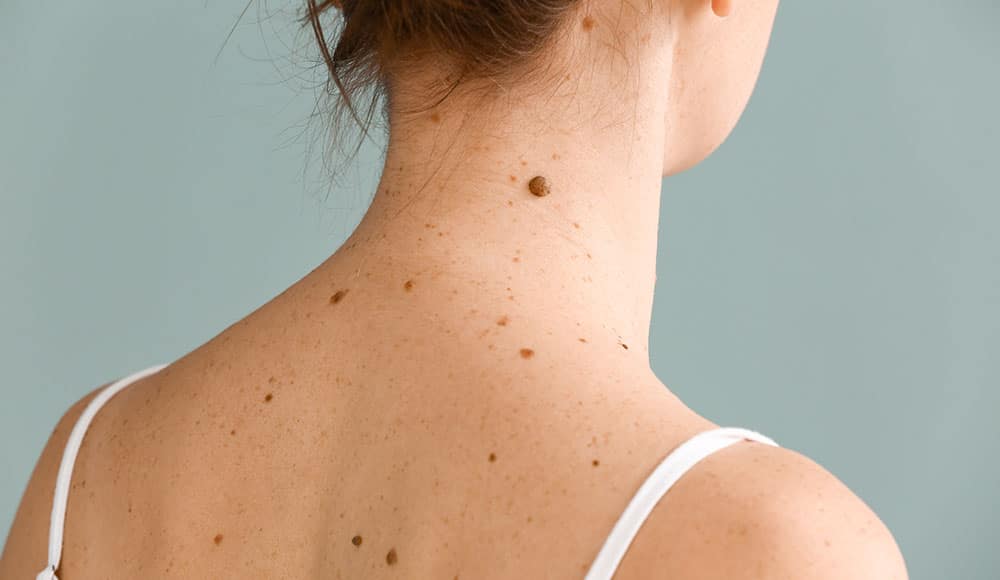
A skin check and mole removal are important ways to detect and address potential cancerous issues. There is a lot more surface area on the skin than most realize. Skin lesions can be found on practically any part of the body, so it is always better to be safe than sorry. At Dermatology Associates in Tinley Park, we offer professional skin checks and mole removal procedures by board-certified dermatologists.
Areas of Treatment
Our providers perform a comprehensive full-body skin exam to monitor for changes in your skin. During your visit, we focus on:
- Scalp skin check and neck area
- Facial mole removal for protruding or changing spots
- Back and shoulders exam to view hard-to-reach areas
- Evaluation of suspicious lesions on the torso or limbs
What Is a Skin Check/Mole Removal?
With the skin being the largest organ of the body, regular skin checks are necessary due to the number of areas where cancerous lesions could be hiding. Dermatological experts have been trained to examine patients and detect whether they have developed any signs of skin cancer. They can also tell patients if a suspicious mole is a cause for concern or benign.
Skin cancer should be dealt with as early as possible to prevent continued growth. We provide mole and lesion removal to address these issues. We can also remove benign growths for cosmetic reasons.
Conditions Treated
Early detection of skin cancer significantly improves treatment outcomes. We provide specialized care for a variety of concerns, including:
- Melanoma screening for high-risk pigmented lesions
- Mohs micrographic surgery
- Basal cell carcinoma (BCC)
- Squamous cell carcinoma (SCC)
- Atypical nevi (dysplastic moles)
- Evaluation of benign moles for peace of mind
Good Candidates for a Skin Check
Patients who want to make sure that they don’t have any signs of skin cancer are good candidates for a skin check. If they believe that the beauty mark they have is growing at an alarming rate, they need to have it checked right away. Ideally, patients should make this checkup a regular occurrence.
The Skin Check Process
Patients will be asked questions when they come in for a skin check. They will be first prompted to discuss their specific concerns, along with their medical history.
Their skin will then be carefully checked, starting with the most obvious areas before moving on to others. Blemishes, cuts, moles, and other forms of skin imperfections will be noted. Biopsies can then be performed when required for potentially cancerous lesions. If a biopsy confirms skin cancer, our Mohs surgery team can provide precise, tissue-sparing removal — learn more about Mohs micrographic surgery.
If there is a need to remove a mole right away, this can be done either through surgical excision or shave excision. The steps involved with the process will then be explained before the treatment is carried out.
Your Dedicated Providers
At Dermatology Associates, our team specializes in the prevention and treatment of skin cancer in Tinley Park. Our board-certified dermatologists have extensive experience in clinical and surgical care. As skin cancer specialists, they work alongside an experienced provider team to deliver high-quality outcomes.
Mole Removal Aftercare
Some discomfort and irritation can be expected in the first few hours of the recovery period following mole removal. Patients will be instructed not to remove the dressing that is covering the affected areas.
Regular cleaning and replacement of the dressing will be required. Patients might also be given topical creams or jellies to apply to the spots where the mole was previously located.
How Much Does a Skin Check and Mole Removal Cost?
A skin check and mole removal may cost different amounts depending on several factors. The techniques necessary to remove the lesion can affect the total price, as can the number of lesions being removed.
Protect Your Skin Health
Whether you need a skin check in Tinley Park or mole removal in Palos Heights, our team provides the specialized care you deserve. Contact a dermatologist at our New Lenox practice today to schedule a skin cancer screening.
FAQ
How often should I get a skin check?
What should I be looking for between in-office skin checks?
Our dermatologists encourage our patients to take a proactive role in their skin health by performing self-checks at home between their scheduled in-office checks. You should keep an eye out for any new moles, lumps, patches of crusty skin, red patches, growths, depressions, or sores that do not seem to be healing. You should also look for changes in the size, shape, and texture of existing moles. Be sure to notify your dermatologist if you develop new areas of concern or note any abnormal symptoms or changes in the appearance of existing moles.
Do all moles need to be removed?
No, some moles are benign and do not pose any threat to your health. Some patients choose to have a mole removed for cosmetic purposes. Mole removal is often recommended when there are changes in size, shape, or general appearance.
Is mole removal painful?
There are various ways to remove a mole with some producing more discomfort than others. A local anesthetic is typically used to minimize discomfort. During your consultation, we will discuss, in-depth, what you can expect before, during, and after your procedure.
Does mole removal leave a scar?
The degree and visibility of post-treatment marks after mole removal depends on the technique used, as well as the size and location of the mole being removed. Our physicians consider many factors when determining the best option for safe, effective mole removal with minimal scarring.
Is a skin check painful?
A standard painless skin check is non-invasive and involves a visual inspection of the skin surface. If a biopsy is necessary, a local anesthetic is used to provide comfort during the procedure.
Should I choose laser mole removal vs. excision?
The choice between laser mole removal vs. excision depends on whether the mole is benign or requires a lab analysis. Excision is typically preferred for suspicious lesions to ensure clear margins.
I have been a patient of Dr. Mesirow for 30 years. I have always been extremely satisfied with my treatment & care. Everyone is friendly & professional.
