



Treat skin cancer while preserving healthy tissue with Mohs surgery at Dermatology Associates
Mohs surgery, or Mohs micrographic surgery, is a specialized skin cancer treatment for removing pre-malignant or malignant skin cancer cells. Because this delicate procedure demands advanced surgical precision and tissue analysis, choosing an experienced specialist is essential.
Dr. Vivek Iyengar is a board-certified dermatologist with fellowship training in Mohs surgery, and he has published several articles and book chapters on the subject. Dr. Iyengar and the treatment team at Dermatology Associates are expert providers of Mohs surgery in Tinley Park, Palos Heights, and New Lenox.
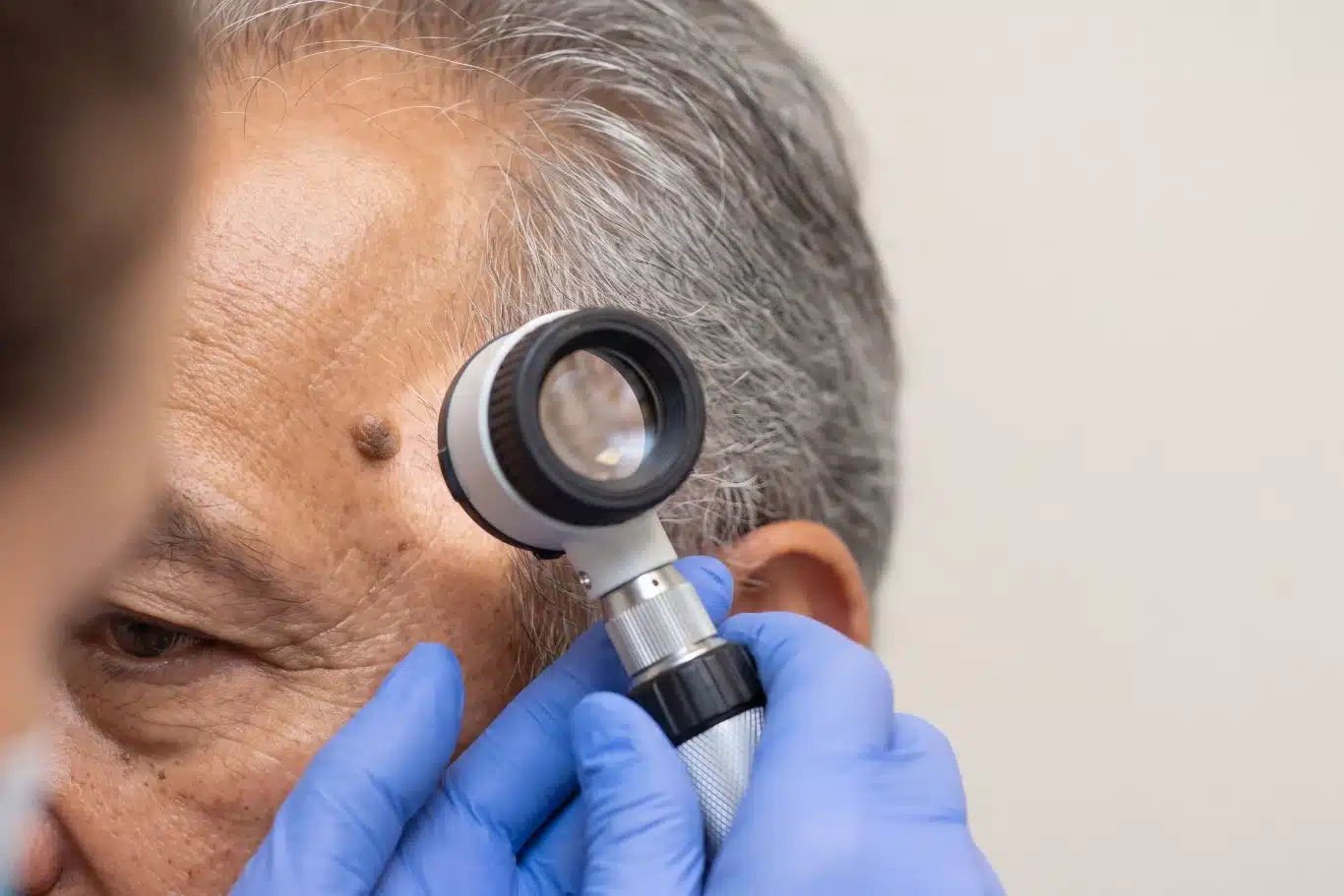
What Is Mohs Micrographic Surgery?
The Mohs technique is highly effective in eliminating cancer cells while sacrificing as little healthy tissue as possible. It involves excising ultra-thin layers of tissue from the affected area and examining them under a microscope. The surgical procedure is ideal for treating the two most common forms of skin cancer: basal cell and squamous cell carcinomas.
I was seen on time and the exam was very thorough – all my questions were answered. The doctor was very professional and attentive – the assistants were also very pleasant and helpful. Thank you.
When Mohs Surgery May Be Recommended
Mohs surgery may be recommended when skin cancer requires precise removal while preserving as much healthy surrounding tissue as possible. The technique is particularly useful for cancers in areas where tissue preservation matters or when the cancer has characteristics that make complete removal more challenging.
Mohs Surgery for Basal Cell and Squamous Cell Carcinoma
Mohs surgery is commonly used to treat certain basal cell carcinomas (BCCs) and squamous cell carcinomas (SCCs). During the procedure, Dr. Iyengar examines each layer of removed tissue under a microscope before proceeding, removing additional tissue only when cancer cells remain.
Top Benefits of Mohs Surgery for Skin Cancer Treatment
Mohs surgery offers numerous benefits, making it the gold standard for skin cancer treatment:
-
High Success Rate: A 99% cure rate for basal and squamous cell carcinomas.
-
Tissue Preservation: Removes only cancerous tissue while sparing healthy skin.
-
Precise Results: Step-by-step mapping allows for thorough cancer removal.
-
Minimally Invasive: Quick recovery and minimal impact on daily life.
-
Advanced Reconstruction: Improves cosmetic outcomes, especially for cancer in visible areas.
Am I the Right Candidate for Mohs Surgery?
If you have been given a referral for a diagnostic cancer screening or the following conditions apply to you, contact Dermatology Associates for a consultation.
- You have been given a diagnosis of skin cancer or the presence of pre-cancer cells.
- New lesions or spots have appeared in previously treated areas.
- You have skin lesions or spots that have never been examined or cancer screened.
We recommend a comprehensive skin check and mole removal evaluation to assess any suspicious spots or potential skin cancer risks.
What Happens During a Mohs Surgery
Mohs surgery in Tinley Park, Palos Heights, and New Lenox is performed as an outpatient procedure using a local anesthetic injection. If more extensive skin reconstruction is anticipated, there may be a referral to a doctor who may perform the surgery in a hospital while the patient is under general anesthesia.
Once the area is numb, Dr. Iyengar removes the raised portion of the lesion and excises a thin layer of tissue. This tissue is processed, placed on a glass slide, and examined under a microscope to map any unhealthy cells. The process is repeated layer by layer until no cancerous or abnormal cells remain.
Reconstruction and Wound Closure After Mohs Surgery
After removing the cancer and confirming if the margins are clear, Dr. Iyengar closes the resulting wound or allows it to heal based on its size, depth, and location. Depending on the defect, closure may involve stitches, a local skin flap, a skin graft, or healing naturally with appropriate wound care. The goal is to close the surgical site while protecting function and achieving an appropriate result for the treated area.
Recovery and Wound Care After Mohs Surgery
After outpatient treatments, minimal recovery time is required. Rest and limited activity are advised for a day or two. In most cases, temporary swelling and mild discomfort are well-managed with non-prescription pain medication and ice packs.
Following post-operative care instructions and not smoking for four to six weeks after surgery will help avoid complications such as infection or poor tissue healing. Aftercare instructions following general anesthesia or more complex skin reconstruction will be determined based on the patient’s medical history and their specific treatment protocol.
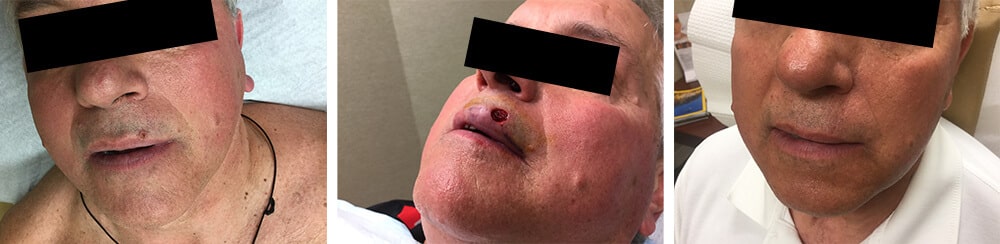
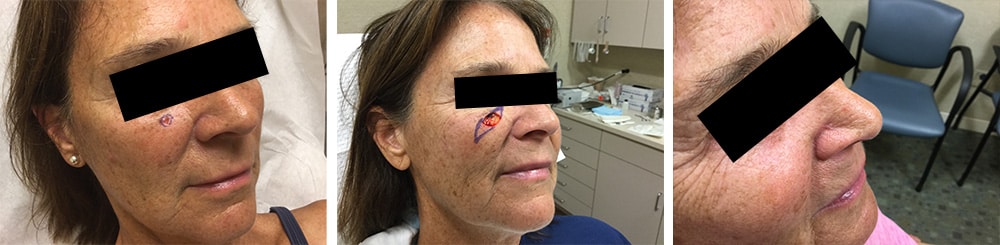
Before & After Gallery
Our Before & After Gallery showcases the transformative results of Mohs surgery and other dermatologic procedures performed at Dermatology Associates.
Meet Your Fellowship-Trained Mohs Surgeon
Dr. Vivek Iyengar is a board-certified dermatologist and fellowship-trained Mohs surgeon with specialized training in Mohs micrographic surgery. His fellowship training focuses on the meticulous removal and microscopic examination of skin cancer, helping remove cancerous tissue while preserving healthy tissue whenever possible.
His published work in Mohs surgery and skin cancer care further reflects his involvement in the field.
Why Choose Dermatology Associates for Mohs Surgery?
At Dermatology Associates, we deliver expert, patient-centered skin cancer treatment. Our team is trained in advanced techniques like Mohs surgery, focusing on precise cancer removal while preserving healthy tissue and achieving excellent cosmetic results.
We prioritize your safety, comfort, and outcomes by utilizing state-of-the-art technology and providing a supportive, welcoming environment throughout your treatment journey. With a strong emphasis on early detection, treatment, and patient education, we tailor personalized care plans to meet your needs.
Patients throughout Tinley Park, Palos Heights, and New Lenox trust our fellowship-trained Mohs surgeon for precise, minimally invasive skin cancer removal — with the same high cure rates and cosmetic-focused approach at all three of our locations.
How Much Does Mohs Surgery Cost?
The cost of Mohs surgery is based on the details of each patient’s procedure. Most private and public health insurance plans cover the price of cancer screening and treatment fees. Our knowledgeable office staff can assist you in determining available insurance coverage and other accepted forms of payment.
Book Your Mohs Surgery Consultation Today
Take the first step toward effective skin cancer treatment by scheduling a consultation for Mohs surgery in Tinley Park, Palos Heights, and New Lenox. Early detection is essential in treating cancer—contact Dermatology Associates today to schedule your consultation.
