



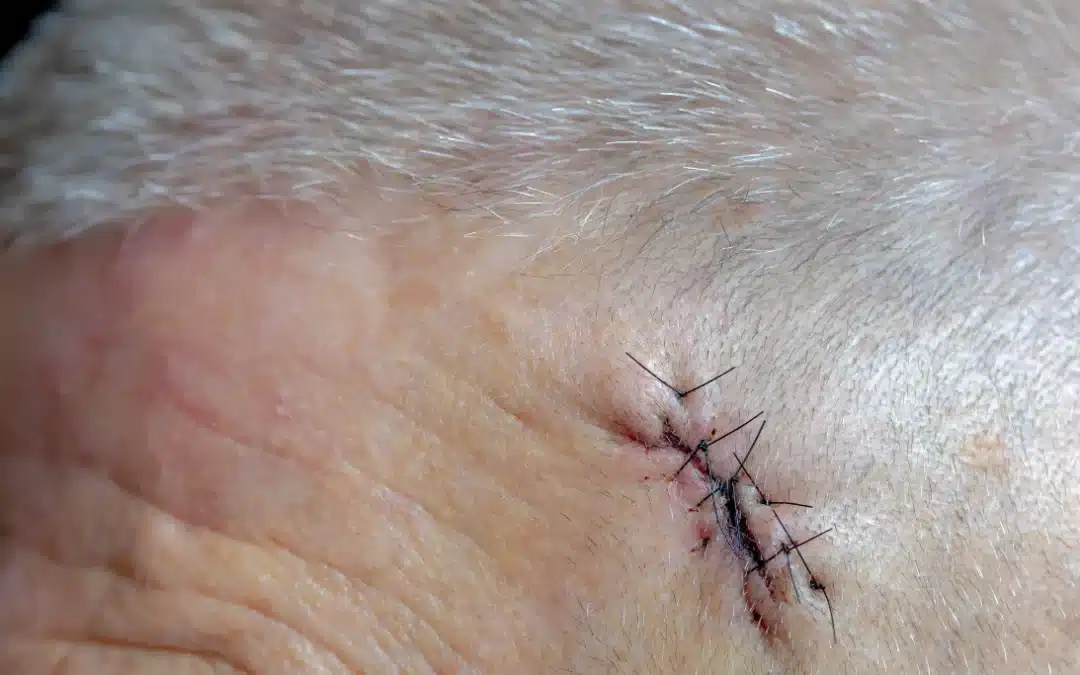
After Mohs surgery for basal cell carcinoma (BCC) or squamous cell carcinoma (SCC), proper wound care and reconstruction support healing and help preserve the treated area’s function and appearance.
Learn what to expect during Mohs surgery recovery, how to care for your wound, and when to seek medical attention from the experts at Dermatology Associates, serving patients in Tinley Park, Palos Heights, and New Lenox, IL.
Factors That Affect Reconstruction After Mohs Surgery
Reconstruction aims to support healing while preserving the treated area’s function and natural contours.
After Mohs surgery removes the skin cancer, the resulting wound determines the next steps in treatment. The appropriate closure method depends on the amount of tissue removed, the wound’s location, and the surrounding skin.
- Wound size and depth: Larger or deeper wounds may require more involved closure or reconstruction than smaller, superficial wounds.
- Location: Areas such as the nose, eyelids, and ears require careful planning to preserve nearby structures and normal function.
- Skin and surrounding tissue: Skin flexibility, tissue availability, and wound tension can influence how the site can be closed.
- Functional and cosmetic considerations: Reconstruction must account for healing, movement, and the appearance of the affected area.
Your surgeon determines the appropriate approach based on the wound and the patient’s needs.
Wound Closure and Reconstruction Options
The approach to wound closure after Mohs surgery in Tinley Park depends on the surgical site’s size, depth, and location. Depending on the wound, options may include direct closure, a skin flap, a skin graft, or allowing the area to heal naturally. Your surgeon determines the appropriate method based on the wound’s characteristics and the need to preserve nearby structures.
Direct Closure With Stitches
For wounds that can be closed without excessive tension, the surgeon may bring the edges together with stitches. Healing depends on the wound’s location, the closure technique, and how well the site is protected during recovery.
Skin Flaps
A skin flap uses nearby tissue to cover the surgical wound. Consider this approach when direct closure is unsuitable or when preserving natural contours matters, especially on the face.
Skin Grafts
A skin graft uses tissue taken from another area of the body to cover the wound. The graft must establish a blood supply as it heals, and the donor site also requires care.
Healing Without Surgical Closure
Some wounds heal through a process called second-intention healing, in which new tissue gradually fills the area and skin forms over the wound. Healing may take longer than with direct closure, depending on the wound’s size, depth, and location.
Mohs Surgery Healing Stages
Healing after Mohs surgery continues beyond the initial closure of the wound. Redness, firmness, and changes in scar texture may persist for months as the tissue matures. The timeline varies depending on the wound’s size, location, and repair method. Wounds healing naturally may take longer to close, while skin grafts require time for the transplanted tissue to establish a blood supply.
Once the wound has healed, ask your care team whether scar treatments are appropriate and how to protect the area from sun exposure.
How to Care for Your Wound After Mohs Surgery
Proper wound care after Mohs surgery helps protect the incision, support healing, and reduce complications. Follow your surgeon’s instructions, as care varies by closure method.
- Clean the wound and change dressings: Keep the original bandage in place for the period specified by your care team. When instructed, gently clean the site and replace the dressing without pulling on stitches or disturbing a graft or flap.
- Apply the recommended ointment: Use the prescribed or recommended ointment as directed to maintain the appropriate moisture level and protect the wound. Avoid adding unapproved products.
- Manage swelling and bleeding: Elevate the treated area when practical, if advised. For bleeding, apply firm, continuous pressure with clean gauze according to your postoperative instructions. Contact your care team if bleeding does not stop.
- Avoid activities that strain the wound: Temporarily limit strenuous exercise, heavy lifting, and repeated bending, which can increase bleeding or pull the wound edges apart. Ask when you can safely resume these activities based on your repair.
- Protect the healing site: Avoid rubbing, picking at scabs, or disturbing stitches. Follow specific instructions for grafts or flaps, which may require additional protection during early healing.
When to Contact Your Doctor After Mohs Surgery
Contact your surgical team if you experience any of the following during recovery:
- Persistent bleeding: Bleeding that does not stop after applying firm, continuous pressure as instructed.
- Possible infection: Increasing pain, spreading redness, warmth, pus, or fever.
- Wound separation: The incision opens, or the wound edges pull apart.
- Changes in a skin graft or flap: Unusual darkening, pale or dusky discoloration, or other sudden changes in the treated tissue.
- Worsening symptoms: Swelling, pain, or drainage that increases rather than improves.
Seek urgent medical evaluation for severe or rapidly worsening symptoms. If you are unsure whether a change is part of normal healing, contact your care team for guidance rather than waiting for your next appointment.
Get Expert Care for Mohs Surgery and Recovery
Proper wound care and follow-up support healing after Mohs surgery for skin cancer. Dermatology Associates provides dermatologic care for patients in Tinley Park, Palos Heights, and New Lenox, IL.
Schedule a consultation to learn more about Mohs surgery, reconstruction, and follow-up care.
Recent Comments